

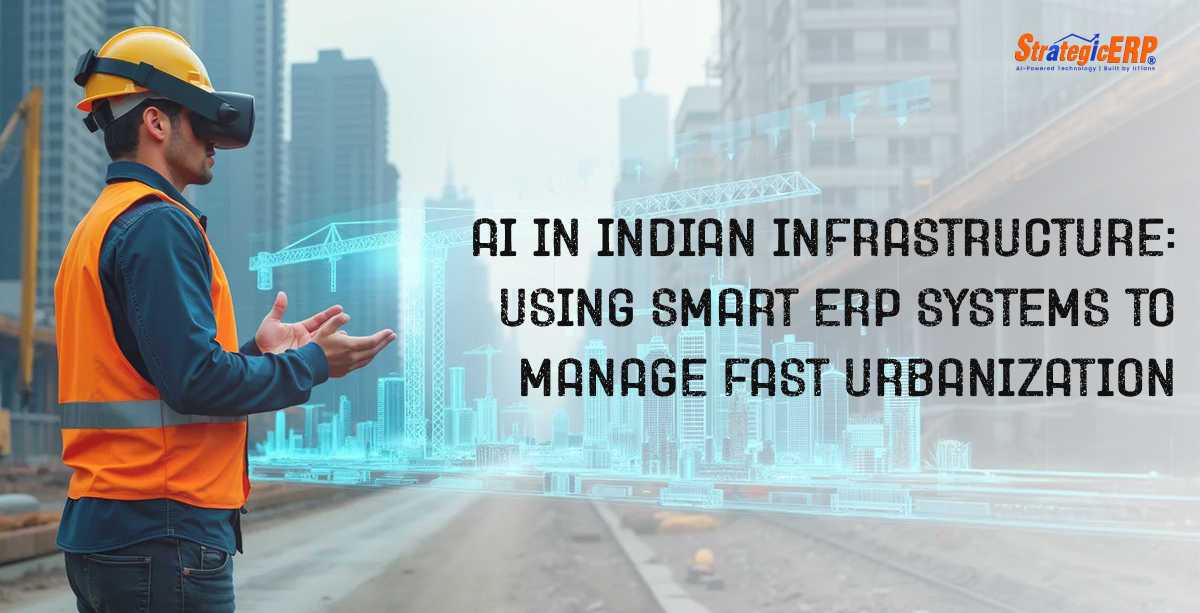
AI in Indian Infrastructure: Using Smart ERP Systems to Manage Fast Urbanization
Category : Digital Transformation
Blog posted by : Admin / 14 Apr, 2026

India's cities are expanding faster than ever before. Every year, millions of people are packing up and heading to cities, which means we need a lot more infrastructure to support them. Think metro lines, airports, highways, bridges, entire smart city projects are coming up all over the place.
Now, while this sounds exciting, it's actually giving infrastructure companies quite a few sleepless nights. Juggling multiple projects simultaneously, getting teams in different cities on the same page, making sure money doesn't run out halfway through has gotten way more challenging than before. Here, impact of AI in infrastructure management and smart ERP systems is significant.
What these digital tools do is straightforward. They help infrastructure companies plan smarter, work faster, and manage everything across their projects without losing track.
India's Quick Infrastructure Development and Urbanisation

Image source: Urban net
India's economy is growing fast, and people are moving to cities in huge numbers. Because of this, the infrastructure sector is expanding incredibly quickly. Industry reports say the Indian infrastructure market could reach $1.4 trillion by 2027, thanks to money coming in from both the government and private companies.
Urban population growth and the need for contemporary infrastructure
Here's an eye-opening figure: by 2030, roughly 600 million people will be calling Indian cities home. All of this is going to put massive strain on housing, transportation, public utilities, basically everything.
Cities need modern infrastructure systems to handle this kind of growth, things like metro networks, highways, energy grids, and reliable water supply. But keeping all these complex projects running smoothly? That's no easy task. It takes smart ERP systems for urban infrastructure development that can bring together resources, budgets, and timelines in a way that actually works.
Infrastructure and smart city projects run by the government
The government has launched some truly ambitious programs, think Smart Cities Mission, Bharatmala, and Gati Shakti, all of which are accelerating infrastructure development nationwide.
These aren't small projects. They need substantial funding and coordination between multiple agencies. To handle this kind of scale, many companies are turning to Infrastructure ERP Software that brings together project data, financial management, and operational workflows in one central place.
Growing demand for digital infrastructure project management
Traditional project management methods just can't keep up with what modern infrastructure demands anymore.
Large projects generate massive amounts of operational and financial data. Without digital platforms like ERP software, teams managing infrastructure projects in India often run into delays, miscommunication, and a frustrating lack of visibility into how their projects are actually performing.
Infrastructure Companies' Difficulties in the Face of Rapid Urbanisation

Image source: Faster Capital
Sure, there's plenty of opportunity for growth, but infrastructure companies are running into some real operational headaches as projects get bigger and more complex.
Overseeing several large-scale projects in various locations
It's pretty common for infrastructure companies to be running multiple projects at the same time, sometimes across different states or even in completely different parts of the country.
When you don't have centralized tools like Infrastructure Project Management Software, keeping track of progress becomes a nightmare. How do you make sure resources are going where they're needed? How do you keep site teams and headquarters talking to each other regularly? It's not easy.
Budgets, stakeholder expectations, and project complexity are all rising
Infrastructure projects today involve so many moving parts, you've got contractors, consultants, investors, government officials, and a whole lot more in the mix.
An AI-powered ERP for infrastructure projects makes handling all this easier by taking care of repetitive workflows automatically, giving you better budget forecasts, and making sure everyone stays coordinated.
Absence of real-time financial control and project progress visibility
Want to know one of the biggest headaches for infrastructure companies? They're often flying blind, they just can't see what's really going on with their projects as things unfold.
When you don't have live data at your fingertips, it's really hard for decision-makers to catch delays before they become serious, spot budget problems early enough to fix them, or even notice that you're about to run out of critical resources.Infrastructure ERP software solves this by giving companies centralized dashboards where they can track project performance, finances, and how resources are being used.
AI's and Smart ERP Systems' Roles in Infrastructure Development
As infrastructure projects keep getting bigger and more complicated, businesses are increasingly relying on digital tools to make everything run smoother.
AI-enabled Infrastructure ERP: What is it?

An AI-enabled ERP system is a platform that brings advanced analytics, automation, and enterprise resource planning together in one place.
It's where you handle everything, project planning, procurement, finances, workforce management, the whole package. With an AI-powered ERP for infrastructure projects, organizations can let the system handle repetitive stuff automatically and get a heads-up on how their projects are likely to play out.
How AI enhances operational effectiveness and decision-making
Infrastructure companies are putting artificial intelligence to work, sifting through old project data to find patterns that could impact future performance.
With AI in infrastructure management, businesses can see delays coming before they hit, work out the smartest way to use their resources, and nail their budget estimates way more accurately.
Using digital transformation to manage intricate infrastructure ecosystems
Digital transformation is changing the game for how infrastructure companies work day in and day out. Once teams start using integrated platforms that support digital transformation in infrastructure, they can communicate instantly, share updates as things happen, and make smart decisions quickly because they have real data in front of them instead of just making educated guesses.
Important Features of ERP Systems Driven by AI for Infrastructure Projects
Modern ERP platforms come with tons of features made specifically for big infrastructure projects. Running on Infrastructure ERP Software, these tools pull together project management, financial control, and operational planning all in one place.
Predictive scheduling and intelligent project planning
AI systems look at data from past projects to predict realistic timelines and flag potential delays before they become problems.
AI-powered cost optimization, forecasting, and budgeting
Automated financial tracking lets companies keep a close eye on project budgets and avoid those nasty surprise cost overruns.
Smart inventory management and automated procurement streamline the entire procurement process
Construction ERP systems make sure construction materials show up on-site exactly when you need them.
Keeping tabs on projects in real-time, no matter where they are
Project managers gain immediate insight into what's unfolding at various locations through centralized dashboards. They can also monitor worker productivity simultaneously.
Analytics dashboards driven by AI for strategic decision-making
Advanced dashboards hand executives the insights they need to make those big strategic calls faster and feel confident about them.
How AI Assists in Handling the Quick Development of Urban Infrastructure
AI is becoming really important for managing large-scale infrastructure growth.
Forecasting infrastructure demand using predictive analytics
AI models study population patterns and city growth to predict what kind of infrastructure we'll need down the road.
AI-assisted resource distribution among several projects
Businesses can use AI in Infrastructure Management tools to divide up workers, equipment, and materials across different projects way more efficiently.
Risk identification in real time and insights into project performance
AI spots potential issues early, so businesses can tackle them before they snowball into big delays.
AI + ERP's Advantages for Infrastructure Businesses

When infrastructure companies adopt integrated ERP systems, they see real operational benefits.
Faster project execution and reduced construction delays
Automated workflows and predictive scheduling mean projects get done quicker.
Improved cost control and resource optimization
Having all your data in one central place helps companies keep costs under control and make the most of their resources.
Planning based on data and making more intelligent business choices
Businesses can use analytics to assess the success of their projects and make more informed plans for the future.
Enhanced transparency, compliance, and reporting
Digital platforms make reporting more accurate and help organizations stay on the right side of regulations.
Scalability to manage multiple urban infrastructure projects
With a Smart ERP for Infrastructure, businesses can grow and manage multiple projects simultaneously without things getting out of hand.
Risks of Managing Infrastructure Projects Without AI-Driven ERP
Companies still using traditional systems often find it hard to keep pace with what modern infrastructure demands.
Cost overruns and project delays brought on by manual procedures
When you're handling data entry manually and using systems that don't talk to each other, mistakes and delays become way more common.
Limited data insights for strategic planning
Without centralized analytics, leadership teams are basically in the dark about how their projects are actually performing.
Inefficient coordination across departments and sites
Poor communication leads to inefficient projects and constant delays.
Managing the quick expansion of infrastructure is challenging
When projects grow bigger, traditional systems struggle to support large-scale operations in the ERP for the construction industry.
How AI-Driven Infrastructure Management Is Supported by StrategicERP

Infrastructure firms need integrated platforms that can handle project execution, financial management, and operational planning all together.
Solutions like StrategicERP provide organizations with a single unified platform where they can manage procurement, budgeting, project progress, and workforce coordination without switching between different systems. This helps companies stay in control of their complex infrastructure operations.
With advanced automation and analytics built in, these platforms show you what's happening with your projects as it happens and help you make better decisions. Many organizations start by trying out a construction ERP software demo to see how digital platforms can improve their operations before they commit to using them across larger projects.
When searching for the Best Infrastructure ERP, businesses typically want solutions that bring together project management, financial control, and AI-driven analytics, everything you need to handle large-scale infrastructure development.
In Conclusion
India's infrastructure sector is going through a major transformation, driven by rapid urbanization, massive investments, and new technology.
To manage this growth effectively, infrastructure firms need smarter digital systems that can handle complex projects and huge amounts of data. AI-powered ERP systems are helping businesses work more efficiently, reduce risks, and make strategic decisions faster.
As urban development speeds up across the country, companies that embrace digital infrastructure management tools will be better equipped to finish projects on time and stay ahead in the evolving construction market.
Frequently Asked Questions (FAQs)
1. What is Infrastructure ERP software?
Infrastructure ERP software is a digital platform designed to manage project planning, budgeting, procurement, and resource allocation for large infrastructure projects.
2. How does AI improve infrastructure project management?
AI analyzes project data, predicts delays, optimizes resources, and helps decision-makers plan projects more efficiently.
3. Can ERP software help reduce construction delays?
Yes, ERP systems automate workflows, monitor project progress, and identify risks early, helping organizations prevent delays.
4. How do infrastructure companies benefit from digital transformation?
Digital transformation improves project efficiency, reduces operational risks, and enables infrastructure companies to scale operations effectively.


